

What Is Pallet Flow Racking?
Also called gravity flow. Pallets load at the high back end and roll on sloped rollers to the front. Speed controllers set the pace and a stop holds the load.
First-In, First-Out (FIFO), with separate load and pick aisles.
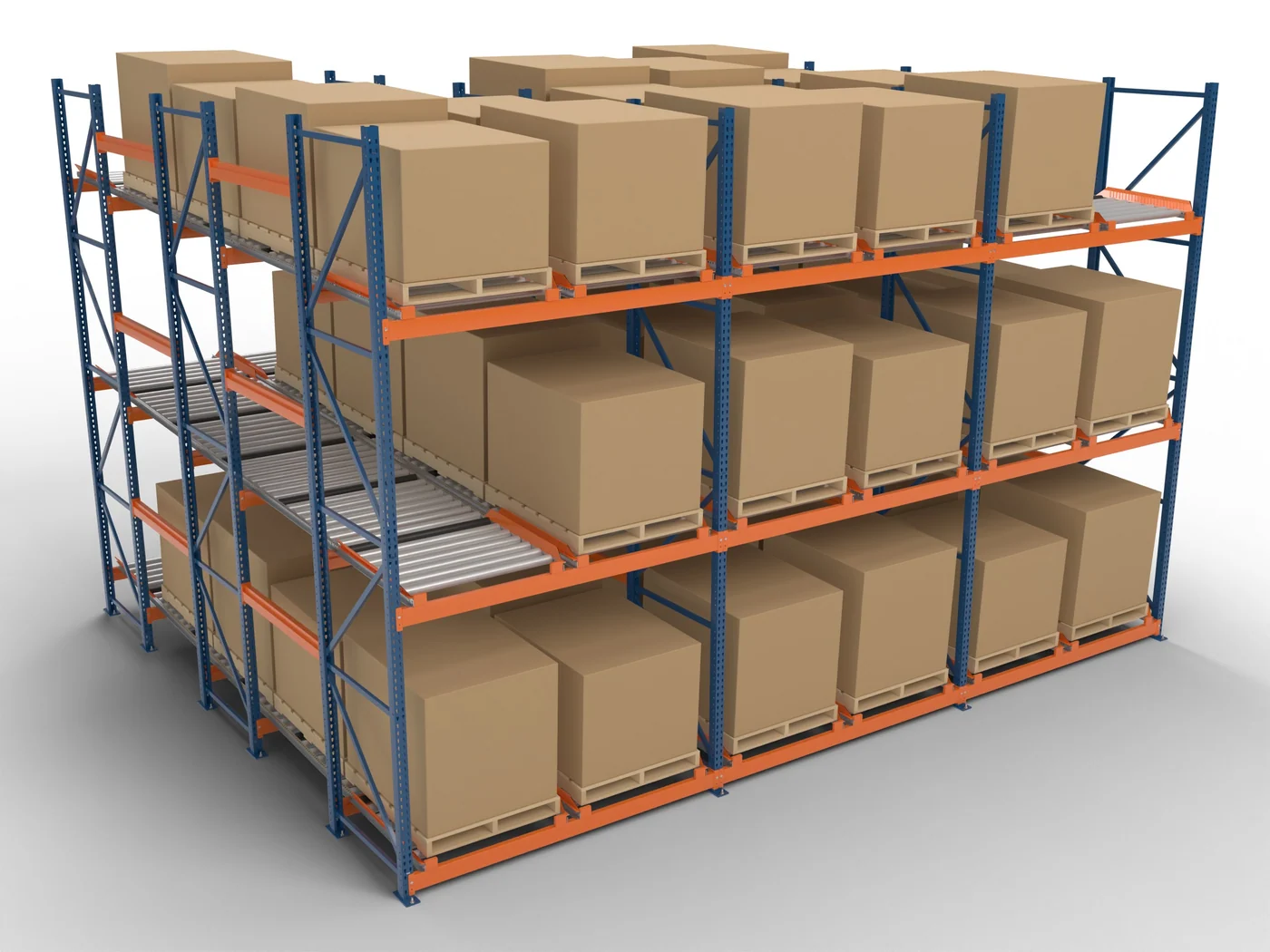
How Pallet Flow Racking Works
Advantages of Pallet Flow Racking.
- Oldest pallet in each lane at the pick face.
- High density. Two aisles only.
- Load and pick at once. No forklifts crossing.
- Drivers never enter the rack.
- Touched once in, once out.
- Fits coolers and freezers.
Pallet Flow Racking Components
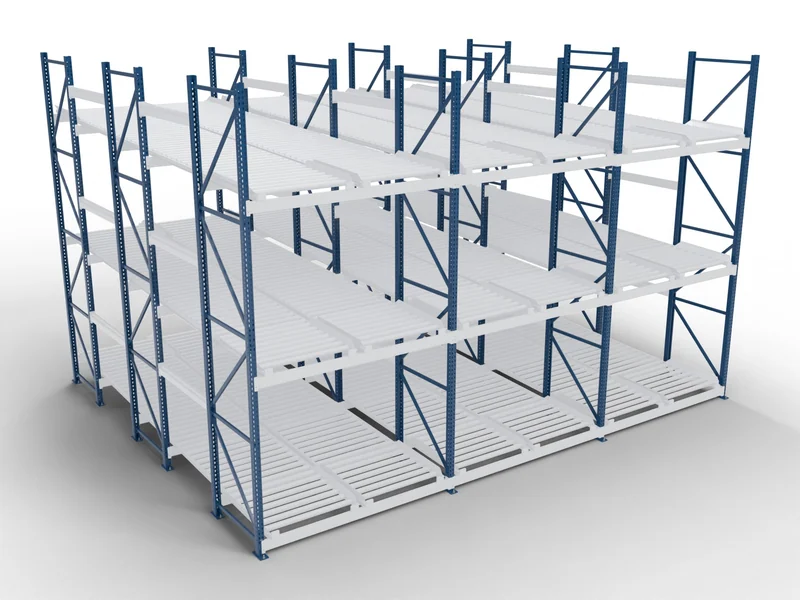
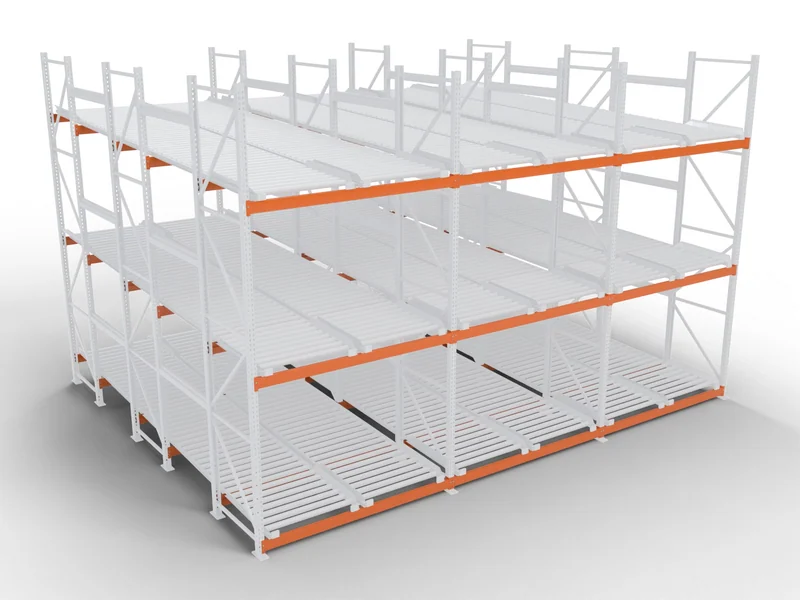
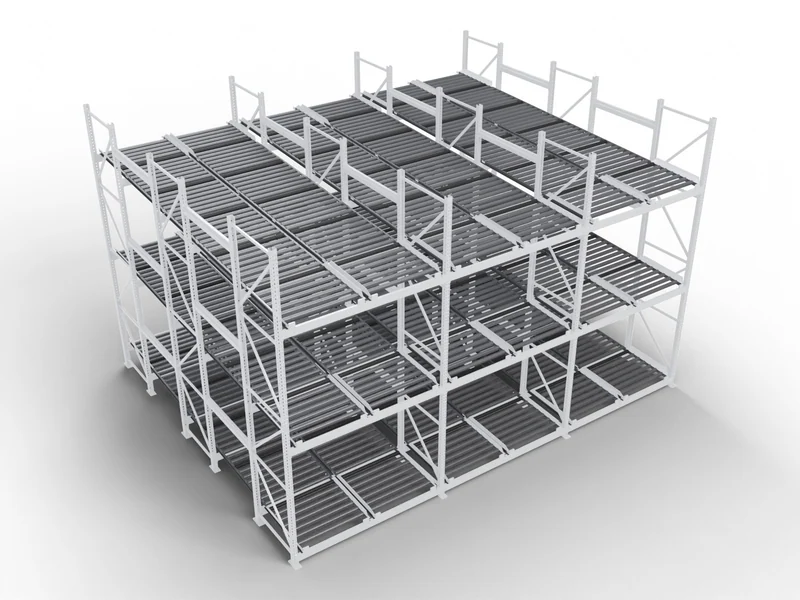
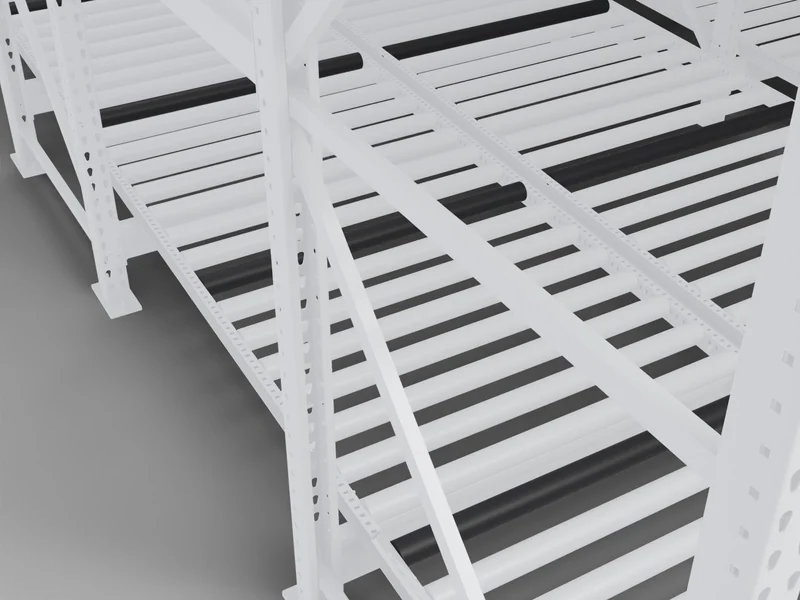
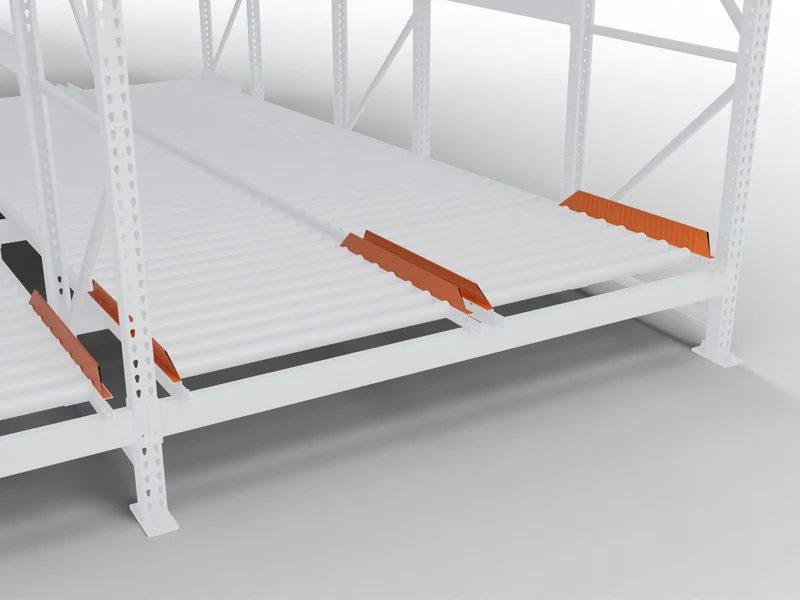
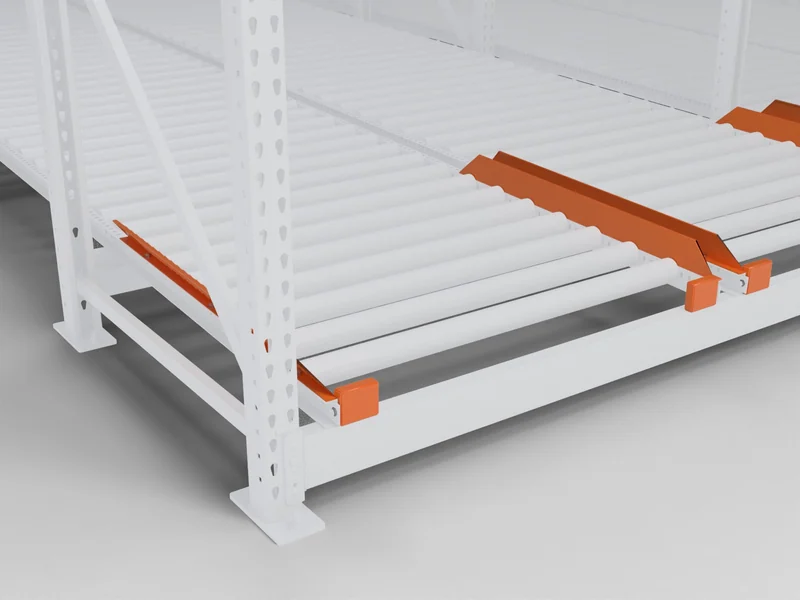
Pallet Flow Racking From Every Side
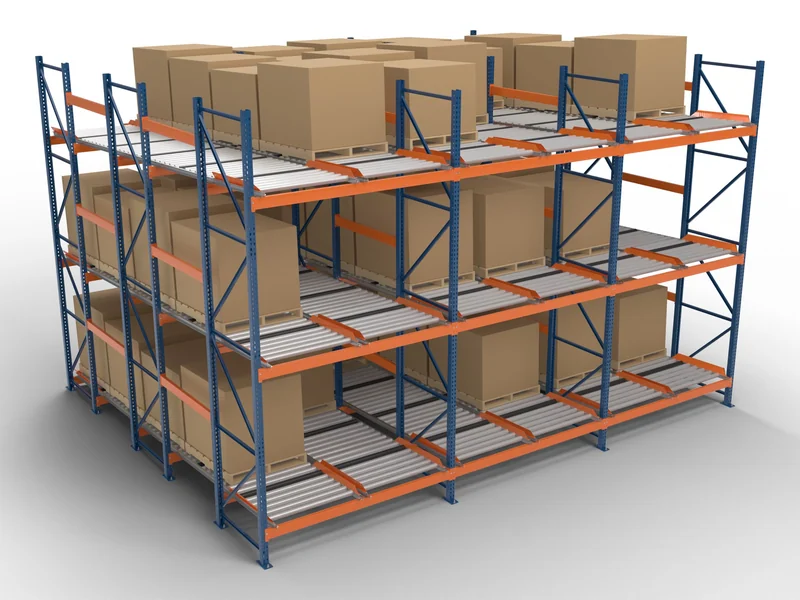
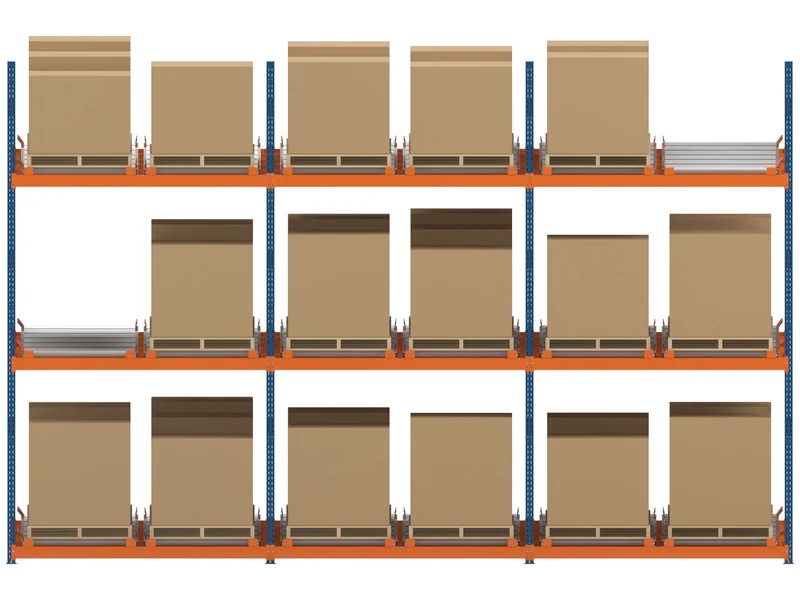
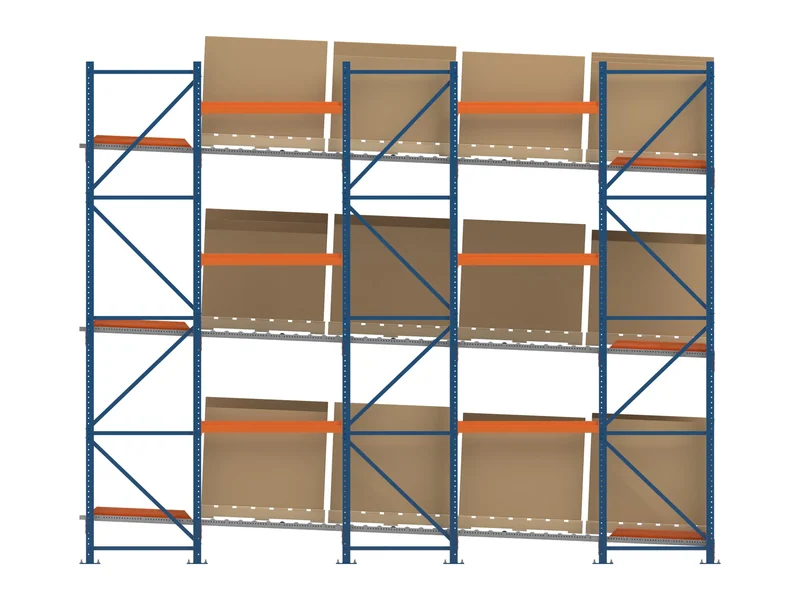
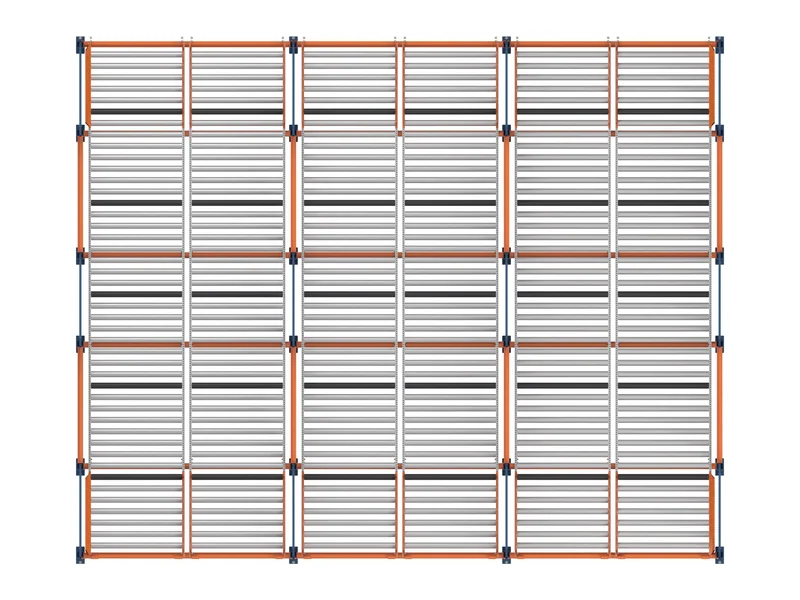
Carton Flow
Carton flow shelves fit in a pallet rack bay and feed cases and totes to the picker, under your reserve pallets.
Where Pallet Flow Racking Is Used
- Food, beverage and dairy.
- Pharmaceutical, lot control and expiry.
- High-volume distribution.
- Manufacturing lines.
- Cold storage.
It costs more per position. For slower items, push-back or selective racking.
Common questions
How steep is a pallet flow lane?
About three-eighths to a half inch of drop per foot, roughly two degrees. The maker sets it for your pallets. Heavy pallets need less, light ones more.
Which pallets flow?
Solid, straight bottom boards roll best; broken boards, soft plastic pallets and leaning loads stop. Full-width rollers forgive the most. Bring a sample pallet and we run it.
How deep can pallet flow go?
Two to twenty deep, most four to ten. The maker sets the speed controllers and stops for your pallet weight, slope and depth.
What happens when a pallet gets stuck?
Stop and call a trained person. The pallets behind it are held back by gravity, so clearing a lane follows the maker's procedure. Worn rollers, bent stops and bad pallets cause hang-ups.
Pallet flow or drive-through?
Both are first in, first out. Pallet flow is faster and easier on the rack, for pick faces and high turns. Drive-through costs less per position and takes rough pallets, for bulk dated goods.


