
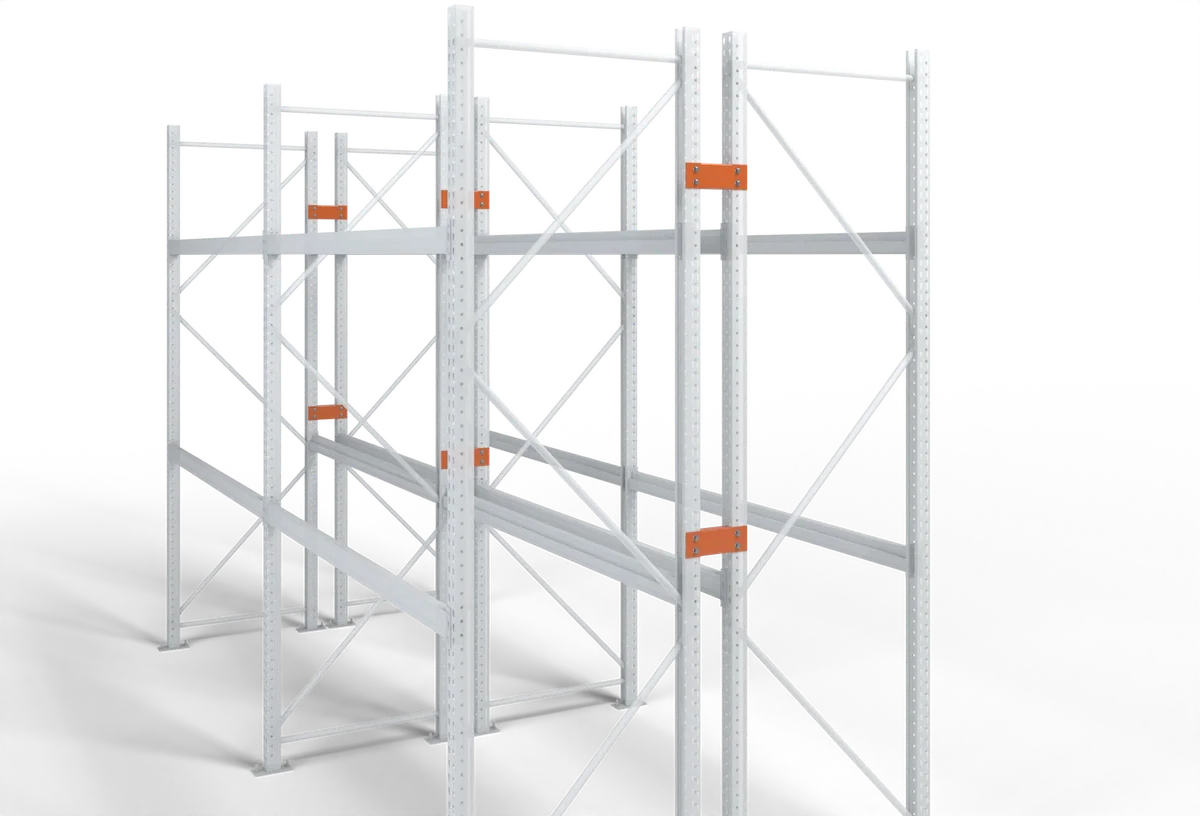
What a Row Spacer Does
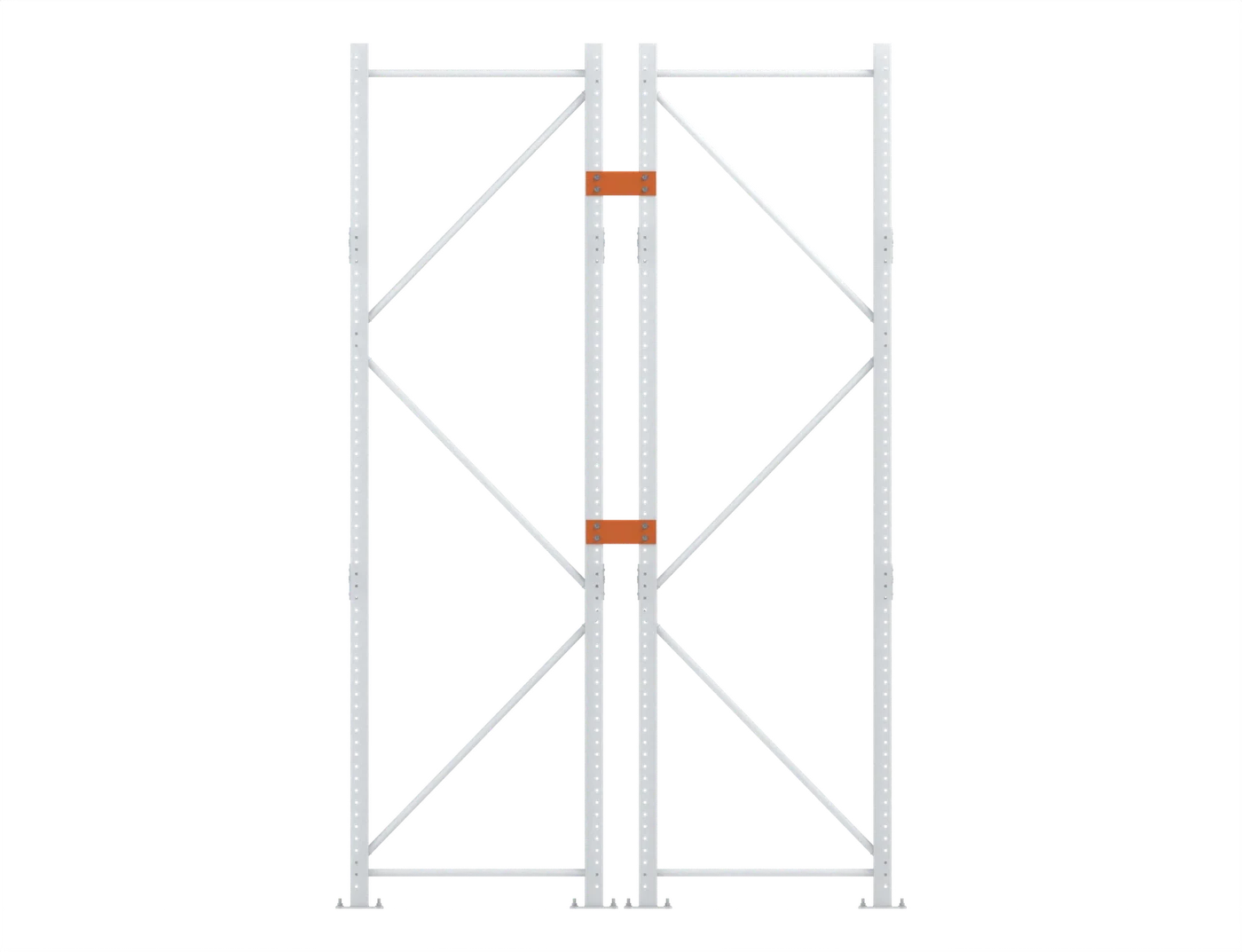
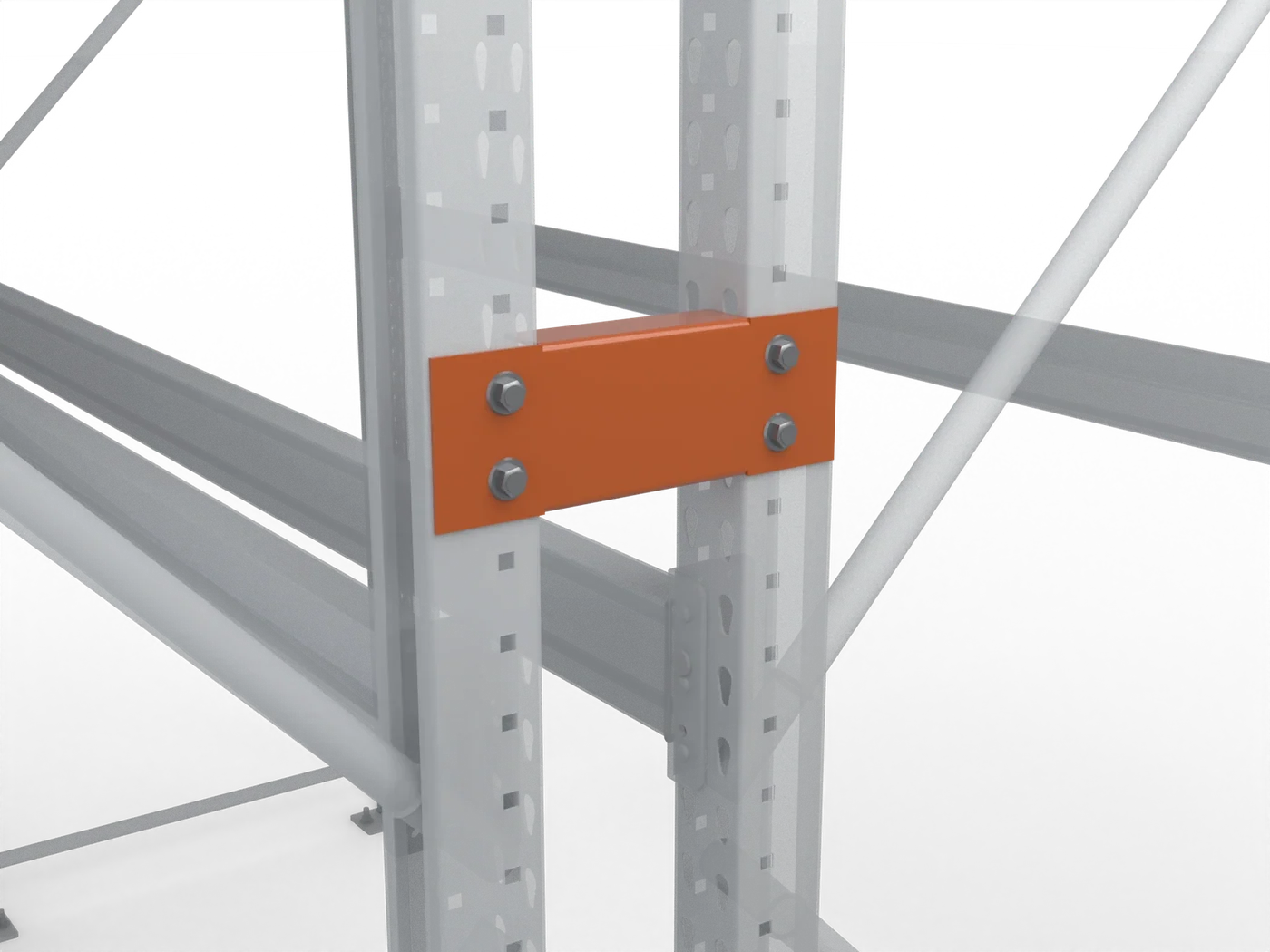
Row spacers bolt back-to-back frames together at a fixed gap, tying them into one structure and holding open the longitudinal flue between the rows. A 12" spacer leaves a 6" gap between loads when each pallet overhangs 3" at the back. Your fire design sets the gap you need.
Sizes and Where They Go
| Spacer length | Gap between loads (3" overhang each side) | Used for |
|---|---|---|
| 6" | None | Tight buildings; only where the fire design allows and loads do not overhang |
| 8" | 2" | Only where the fire design allows it |
| 12" | 6" | A common longitudinal flue; confirm with your fire design |
| 18" and up | 12" and up | Freezers, high-piled storage, in-rack sprinkler lines |
The maker's or engineer's spacer schedule sets how many go on each frame pair and at what heights. Taller frames get more. Count the frame-pair locations, then multiply by spacers per location.
When Row Spacers Are Required
- Any back-to-back rows.
- Sprinklered buildings.
- Seismic areas.
- Tall rack.
Missing spacers are the first thing the fire inspector checks.
Need Spacers?
6", 8" and 12" in stock for 3" columns; others made to order.
Common questions
What size row spacer do I need?
12 inches is common. With 3 inches of overhang at the back of each pallet, it leaves a 6-inch gap between loads. Your fire design sets the gap you need.
How many row spacers per upright?
As many as the maker's or engineer's spacer schedule calls for. Taller frames get more.
Are row spacers required by code?
ANSI MH16.1 expects back-to-back rows tied, and the fire design sets the flue. Inspectors check.
Can I use wire deck or a beam as a spacer?
No. A beam is not rated for sideways load and blocks the flue.


